Lifted a Bybit block set off by a third-party trading bot
A connected third-party bot traded via API — Bybit's risk system read its pattern as suspicious activity and closed withdrawal. We explained the operations — the block was lifted in 13 days.
Anonymized case. A similar situation does not mean the same outcome or timeline.
What happened
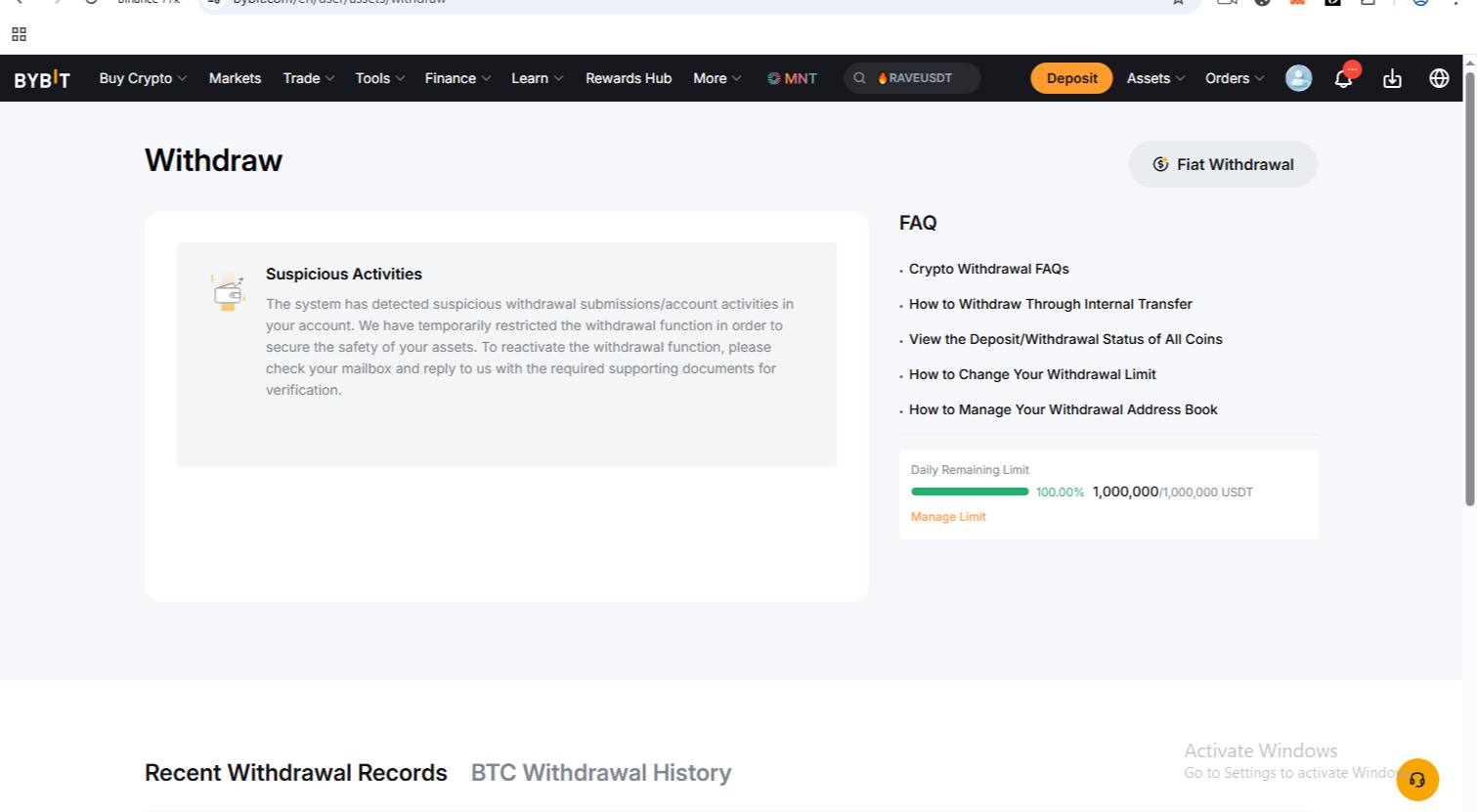
Bybit's risk system flagged “suspicious activity” and closed withdrawal — the trigger was a third-party trading bot.
The client connected a third-party bot via API. The rhythm and frequency of trades changed — the security system saw an anomaly, restricted withdrawal and asked for explanations.
Automated trading via API is allowed by exchange rules. The problem was not a violation but how the bot's pattern looked to the risk system.
Initial data
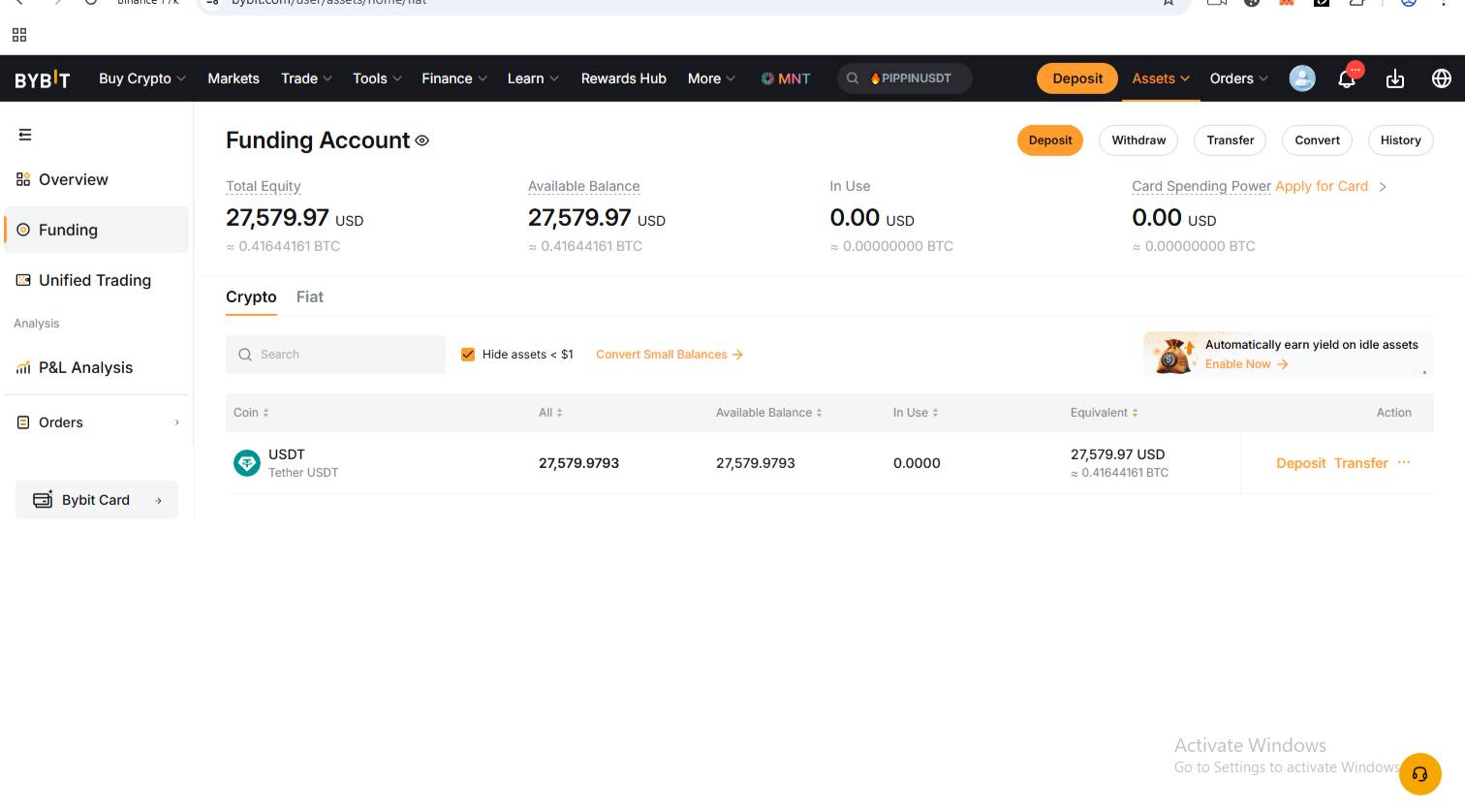
Withdrawal restricted “pending review”; funds on balance, trading formally available.
The system logged an anomalous operations pattern; lifting the restriction required supporting documents and an explanation.
Trade history, bot and API connection data, proof of the source of funds on the account.
Case workflow
Identified the trigger: not the client's operations but the changed trade rhythm after the bot.
Show automated trading is legitimate: the bot worked within exchange rules, operations transparent.
Collected trade history and API connection data; explained the pattern that fired in the risk system.
Passed the explanation with documents to Bybit's dedicated review and closed the follow-ups.
How it ended
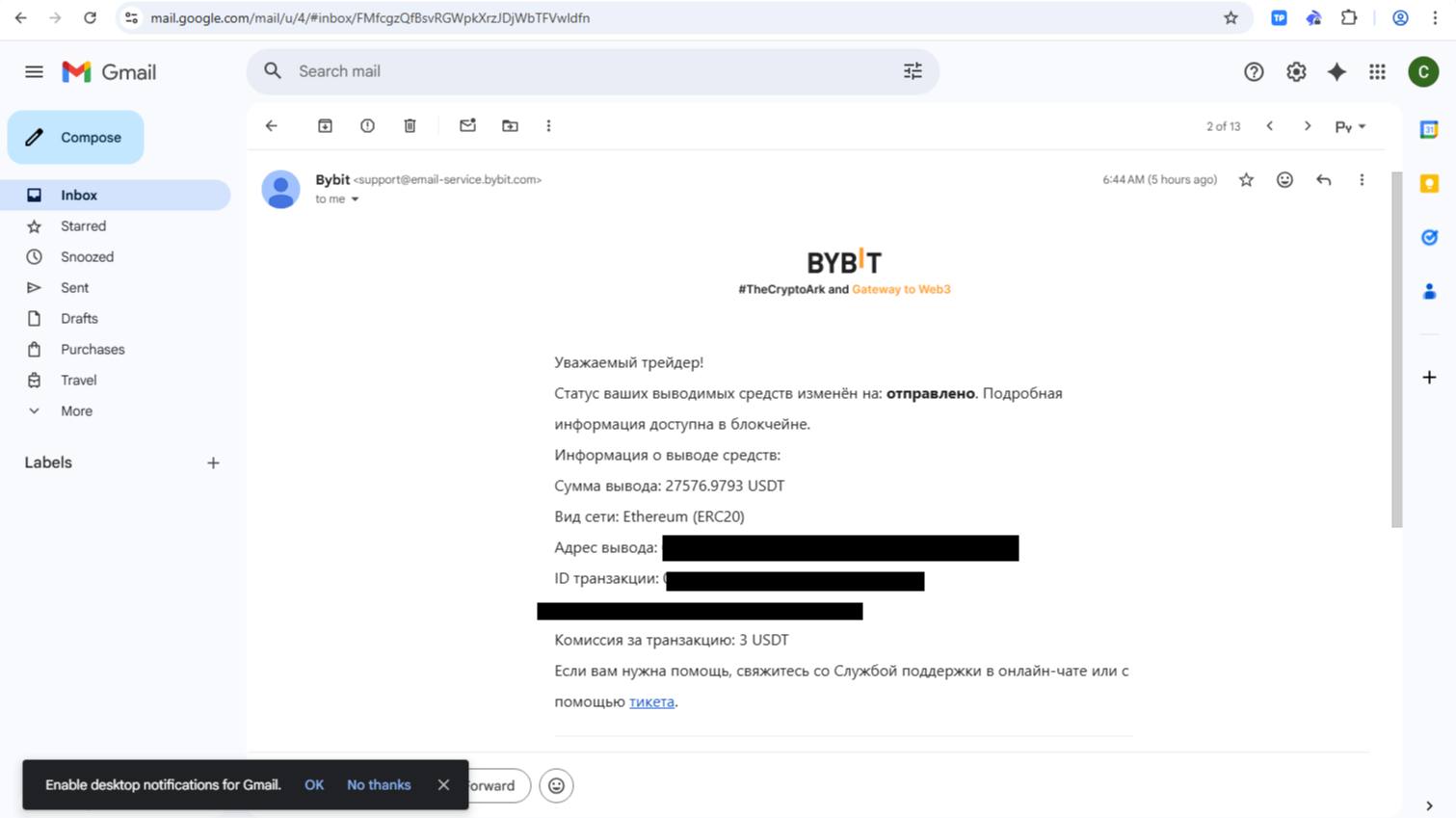
Bybit lifted the restriction — the activity block closed, withdrawal reopened.
to block lifted
The trigger named precisely — the bot's pattern, not the client's actions.
The position leaned on exchange rules: automated API trading is allowed.
Trade history presented so the anomaly became explainable activity.
A similar situation does not mean the same outcome — the result depends on case details and the platform's decision. Client data is never disclosed.
More from practice
Tell us what happened
Describe your situation — we study the case, ask clarifying questions and, before any work, say if we take it and on what terms.